
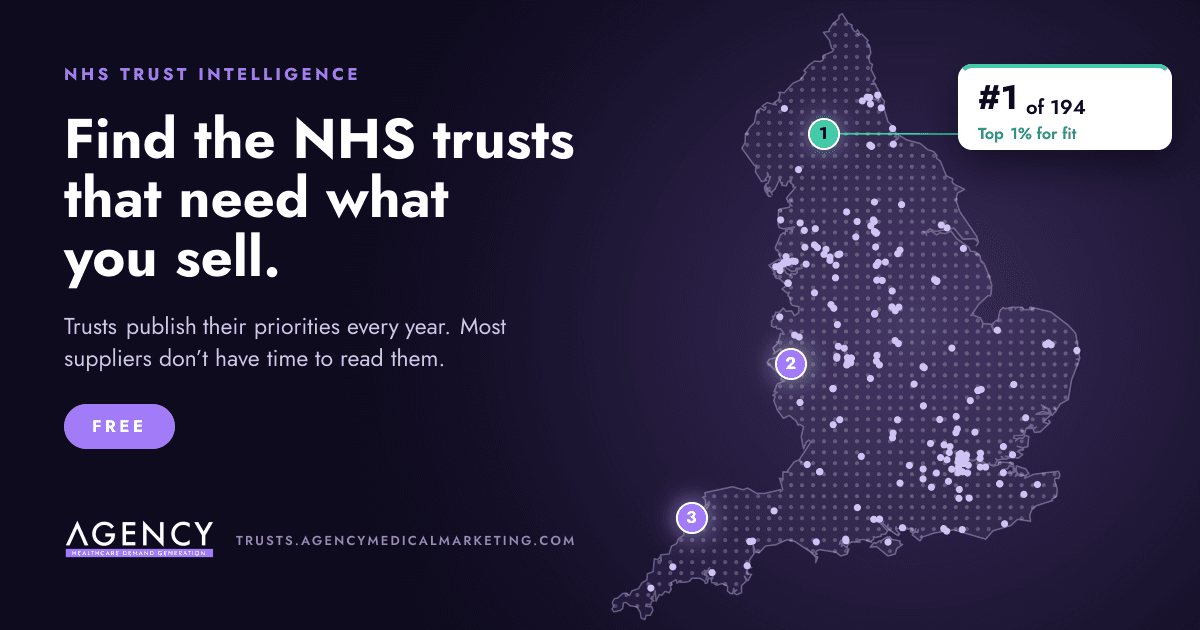
NHS account intelligence
NHS Trust Intelligence
See which NHS trusts fit your product, using their stated priorities and the evidence behind each match.
Explore NHS Trust IntelligenceWhite Paper Chat · Healthcare commercial strategy
Face-to-face meetings have dropped 58 per cent since 2019. Most healthcare companies are responding by hiring more reps. The category leaders are doing something structurally different. Michael Colling-Tuck in conversation with Badri Wadawadigi on what that looks like.
Watch or listen to the full conversation
Audio only
Six arguments from the conversation
01
The healthcare commercial model was designed when nearly 80 per cent of US physicians met with most reps. By 2016 that was 44 per cent (ZS Associates AccessMonitor). That is not a headcount problem. It is a structural one. More reps accelerates the constraint rather than solving it.
02
The rep is no longer the linchpin of the sale. The Value Assessment Committee, procurement, the clinical champion, the medical information team: the modern deal is won or lost across a stakeholder map the rep may never see in full. The skill required is coordination, not just conversion.
03
CRMs accumulate forms until reps are spending more time on administrative returns than on accounts. The fix is not a better CRM. It is ruthless prioritisation: collect only the data that feeds directly back into how the rep walks into the next conversation.
04
The best playbooks capture what the best reps actually do in the field: the objection handling that works, the framing that lands, the account pathway that has been walked successfully. Peer-to-peer knowledge, systematised. Not a product manual written at launch.
05
Field forces need instruction (what to do in this conversation), engagement (two-click access to what demonstrates value in the room), and reporting (fast enough feedback that the rep sees the data acted upon). When those three work together, the rep is the intelligence node they are supposed to be.
06
Category leaders do not just have larger field forces. They have better playbooks, better pre-call preparation, and better feedback loops. The headcount multiplies a system that already works. Without the system, more headcount produces diminishing returns faster than most commercial directors have absorbed.
About the guest
Badri is a commercial strategy practitioner who has spent the last several years working at the intersection of digital transformation and healthcare field force effectiveness. He has led and restructured field forces across multiple multinational organisations, with particular experience in CRM rationalisation, sales playbook design, and commercial tooling strategy.
The white paper he and Michael co-authored on the modernisation of the healthcare commercial process forms the basis of this conversation.
Read the argument
The written version of the argument: the model that broke, what the category leaders are doing differently, and the three tools every field force actually needs.
A 60-minute triage call. No obligation. We will tell you where the structural gap is and whether we can help close it.
Apply for a free 60 minutes with usHealthcare innovations deserve recognition. We help them get it.
Find the right NHS accounts, assess your readiness, explore campaign decisions or read the thinking behind our work.
See which NHS trusts fit your product, using their stated priorities and the evidence behind each match.
Explore NHS Trust Intelligence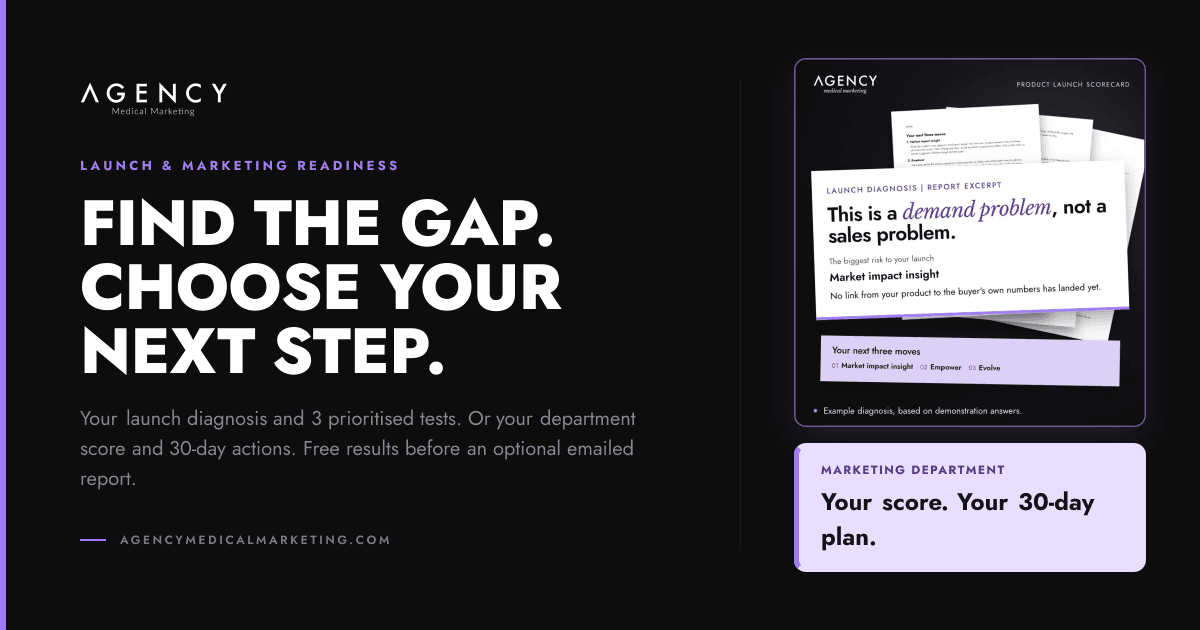
Diagnose a product launch and get three tests to run, or score your marketing department and get 30-day actions. The emailed report is optional.
Find your marketing gaps
Work through the decisions behind a compliant healthcare campaign. See where your approach moves forward or gets stuck.
Play Snake Oil & Ladders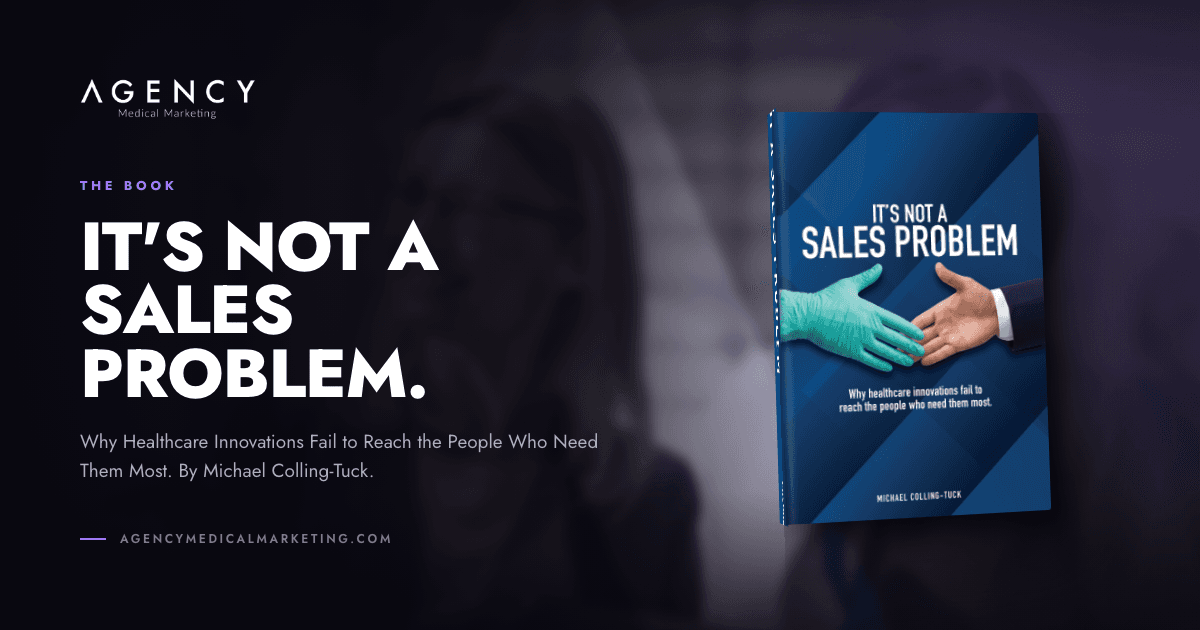
Explore why good healthcare products struggle to reach the people who need them, and how to build demand. Read three free chapters.
Read three free chapters