
A clinically proven platform, one translation away from NHS funding.
The materials were written for clinicians, not commissioners. We rebuilt the pitch around the problem NHS London was already trying to solve. NHS London funded the engagement, and a stalled NHS launch became active.
The market-access companion to the patient-acquisition case studies. Same diagnostic discipline. Different audience. See the methodology →
3 iterations
From product-led pitch to NHS-ready business case
NHS London
Named commissioner. Funding approved.
Launch active
The stalled NHS launch became active following the approval.
The client
BCB Medical. Finnish healthtech. NHS-scale footprint.
Our client is a Finnish healthtech company with over 20 years of experience in clinical data management. Their HepCARE platform enables NHS trusts and clinical networks to manage complex hepatitis patient cohorts, integrating data from multiple sources, tracking treatment pathways, and enabling multidisciplinary teams to collaborate across large geographies. At the time of engagement, HepCARE had over 10.5 million NHS test results integrated, was active in 420 clinics across the UK and Nordics, and was trusted by 29 NHS Trusts. The clinical case for the product was strong. The commercial case needed building.

HepCARE brochure cover. The public-facing artefact underpinning every NHS procurement conversation.
The challenge
The clinical case was built. The commercial case wasn’t.
01
The wrong language
The client's existing materials were written for clinicians and data teams. People who understood integration architecture, cohort analytics, and MDT workflows. NHS London procurement decision-makers needed a different conversation: system burden, population need, pathway outcomes, and cost efficiency.
02
A complex product in a high-stakes setting
HepCARE solves a genuinely difficult problem: managing blood-borne virus patient cohorts across a Hub and Spoke network of 5 ICS regions, 26 spoke organisations, and thousands of new cases entering through ED testing since 2022. The scale of the problem had to be made legible before the platform could land.
03
Multiple stakeholder layers
The audience included NHS clinical leads, system managers, operational delivery network leads, and public health decision-makers, each with different priorities. The pitch had to work across all of them without becoming generic. That required a messaging architecture, not a single slide deck.
What we did
Diagnosis first. Then the messaging matrix. Then the deck.
Claims and messaging matrix
Before any design work, we built a claims matrix, cataloguing every substantiated assertion the client could make about HepCARE, mapped against evidence type and regulatory standing. From that we developed a product messaging matrix: the hierarchy of claims, the core positioning statement, and the audience-specific value propositions for clinical leads, system managers, and commissioning bodies.
NHS problem framing
We reframed the pitch around the problem NHS London was already trying to solve. The blood-borne virus testing programme had identified 2,646 new Hepatitis B patients and 989 new Hepatitis C patients in 21 months, creating an urgent, unfunded burden on existing clinical infrastructure. HepCARE became the answer to a question NHS London was already asking.
Proposal deck development
We produced three iterations of the HepCARE proposal deck, each version refining the narrative structure, tightening the clinical evidence presentation, and calibrating the language for NHS procurement. The final deck moved from product-led to problem-led, with a clear 'ideal solution' architecture that positioned HepCARE as a logical conclusion rather than an external pitch.
Brand collateral
Alongside the proposal work, we produced a full HepCARE brochure with three design routes, establishing the visual identity, messaging hierarchy, and compliance-reviewed claims that the client could use across all external communications. The brochure became the foundation for all subsequent sales and partnership conversations.
Outcomes
A clinical product reframed as a commercial answer. Funding followed.
3 iterations
From the product-led pitch we inherited to the procurement-ready business case NHS London approved.
NHS London
Named commissioner. Funding secured following the rewritten pitch.
Launch active
The stalled NHS launch became active following the approval.
29 trusts
HepCARE's existing NHS footprint. The scale the rewritten business case translated into procurement language.
This is the pattern AGENCY sees again and again in healthcare innovation: the clinical product exists, the evidence exists, but the translation into procurement language is the missing step. Getting the message right before the meeting is what determines whether the product gets adopted.
Inside the brochure
Three artefacts. One diagnostic.
Cover
The proposition framed for NHS procurement. Problem-led, not product-led.

Opening spread
The scale of the blood-borne virus caseload introduced before HepCARE is mentioned.
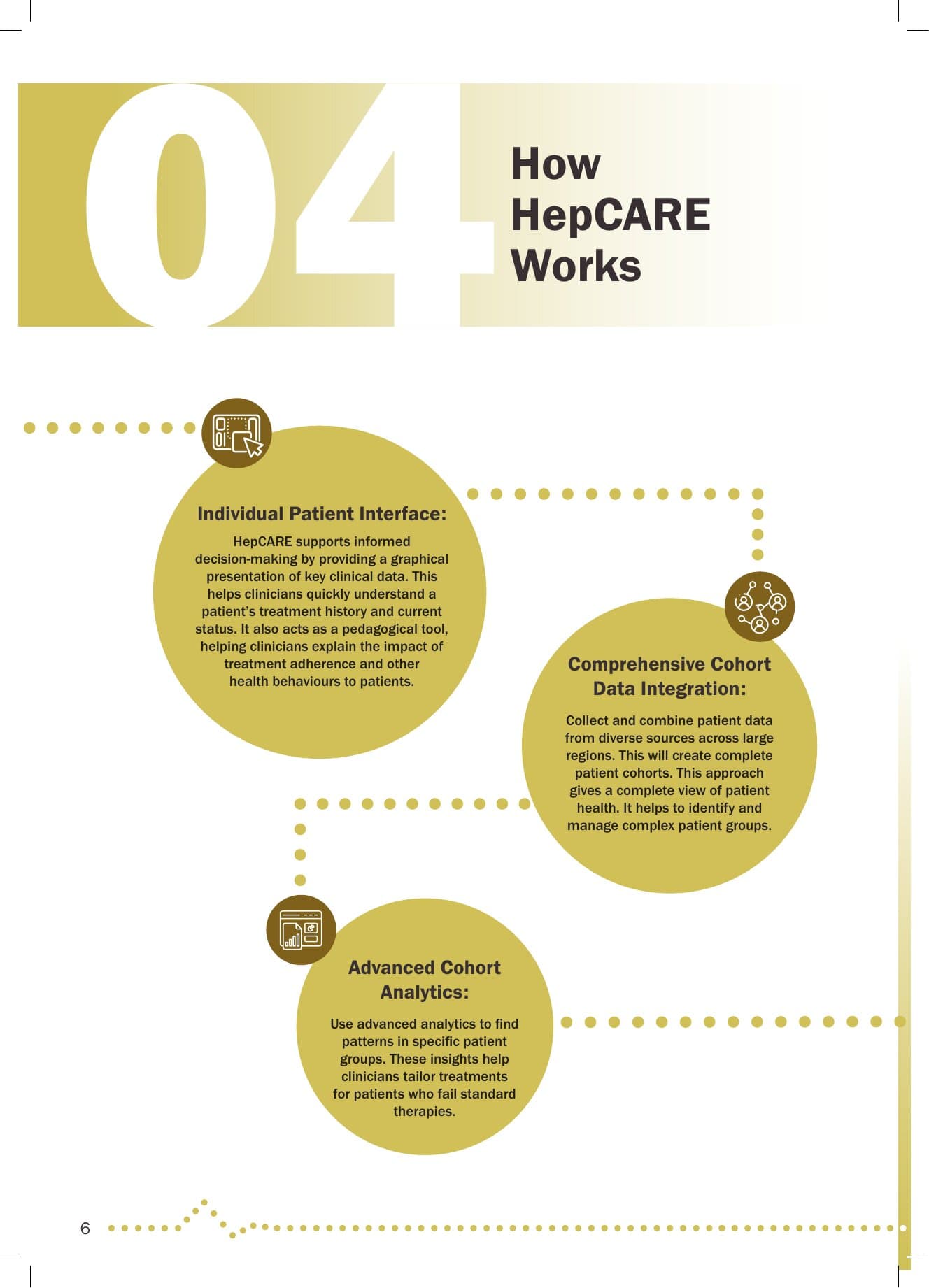
How HepCARE works
The product capability translated into the language of clinical pathways.
The insight behind it
“The product had 10.5 million integrated NHS test results and 20 years of clinical proof. The problem was never the evidence. It was translating that evidence into the language of an NHS procurement decision. That is a messaging problem.”
Pitching to NHS procurement or a strategic partner?
The engagement started with a diagnosis, not a slide deck. If you have a healthcare product that needs to land with commissioners, NHS decision-makers, or large strategic accounts, that is where we start too.
Talk to us about your market-access pitchOr read the methodology for the diagnostic framework behind this engagement, or browse the Product Launch service.
Healthcare innovations deserve recognition. We help them get it.