NHS account intelligence
NHS Trust Intelligence
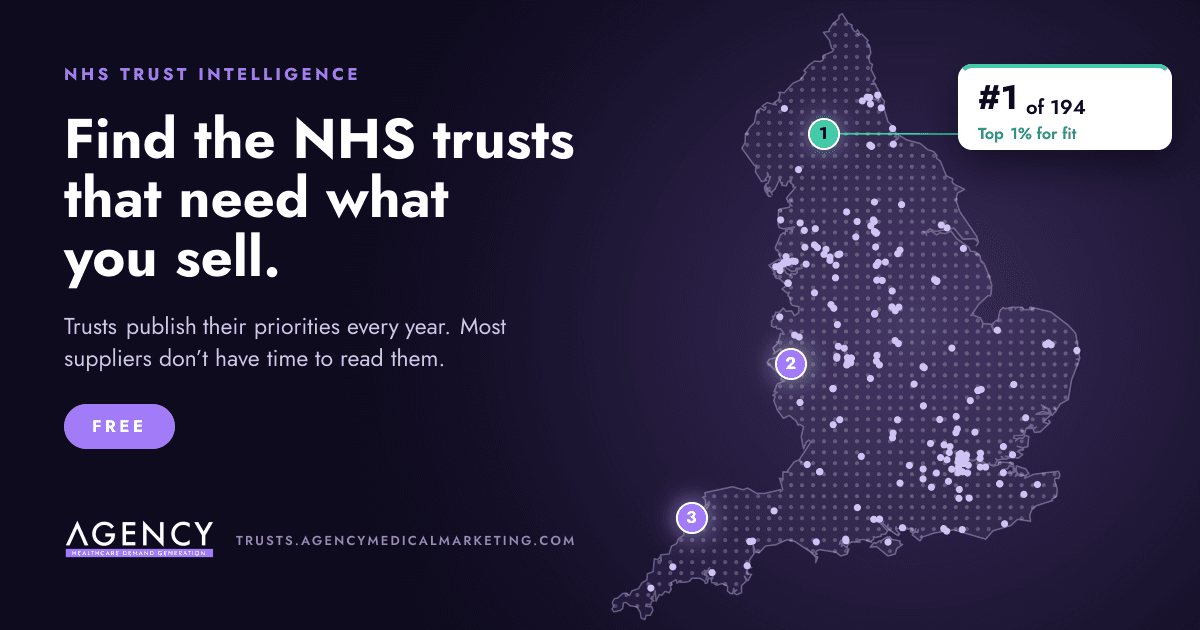
See which NHS trusts fit your product, using their stated priorities and the evidence behind each match.
Explore NHS Trust IntelligenceGuide · Lead Generation
Healthcare companies sit on proprietary insight and publish almost none of it. The ones that do, and do it well, turn a single piece of expertise into a lead-generating, trust-compounding content asset that works for years. This guide explains how.
The thesis
Most healthcare companies know more about their space than anyone else does. Twenty years of clinical trials, surgical observation, procurement battles, reimbursement negotiations. That knowledge sits in slide decks, rep-of-the-year talks, internal wikis, and the heads of three senior people.
A thought-leadership lead generation campaign takes one of those insights, wraps it in rigour, surrounds it with supporting content, and puts it behind a gate that captures a lead before the information changes hands.
Done well, the gate is a fair trade. The reader gets a genuinely useful resource. You get a named, qualified contact whose interest is already proven by the act of downloading.
Step 1
Insights are not mere facts. They are revelations that provide a deeper understanding of a complex issue. Used well, they position your organisation as a thought leader in the healthcare industry. Four things a strong insight does:
01
Thoughtful insights guide readers to see their industry, challenges, and solutions in a new light. They create the aha moments that stick in the mind long after reading.
02
By offering unique and profound insights, you demonstrate a deep understanding of the healthcare field. Readers begin to trust your organisation as a knowledgeable guide and a source of wisdom.
03
Thought leadership is about more than information; it is about inspiration. Good insights move readers to think differently, make informed decisions, or take action that aligns with their goals.
04
Insight-driven content connects on an emotional level. It resonates with the reader's experiences, fears, and hopes within the healthcare context, creating a sense of empathy and recognition.
Step 2
The mistake most companies make is treating a strong insight as a single piece of content. In practice, one good insight carries enough depth to generate at least sixteen distinct content formats, each one reaching a different audience segment and stage of the buyer journey.
Format 01
A comprehensive look at the insight with in-depth analysis, worked examples, and actionable takeaways.
Format 02
A formal document detailing the research and its implications. Often the B2B-to-B2B currency.
Format 03
A visual representation that breaks down complex data into digestible chunks. High share-ability.
Format 04
Shorter pieces that explore specific facets of the insight, or give a general overview. Gateway formats.
Format 05
Live online sessions where the insight is presented and discussed, often with Q&A. Lead-capture built in.
Format 06
Short explainers or long-form interviews about the insight. Most shareable on social.
Format 07
Conversations or interviews around the insight. Build a long-form relationship with an audience that listens while commuting.
Format 08
Self-assessments that let the user interact with the insight, which massively improves recall.
Format 09
Visual tours through the insight. Perfect for SlideShare, LinkedIn, or use inside webinars.
Format 10
Real-world examples of the insight in action, showing practical results.
Format 11
Bite-sized chunks of the insight across platforms to drive traffic to the full content.
Format 12
Dedicated web pages with interactive elements, graphs, and multimedia. Turn the insight into a permanent destination.
Format 13
Practical tools the reader uses at their desk on Monday morning. Highest-perceived-value format.
Format 14
Educational sessions where participants learn the insight in depth and practise applying it.
Format 15
Conversations with experts or those affected by the insight. First-hand perspective.
Format 16
Places where the audience can discuss the insight, share their own observations, and ask questions.
Step 3
The content is the what. These seven campaign types are the how. Most healthcare companies try the first one in isolation and wonder why the pipeline does not move. The compounding effect comes from running several in combination, with the gated asset at the centre.
01
Offer valuable content (eBook, whitepaper, data study) behind a sign-up form. The goal is to capture lead information in exchange for the content itself. The foundation of the whole system.
02
Once the reader signs up, enrol them in a sequence of emails that explore the topic further, directing them to related articles, webinars, or more gated content. Nurture does the conversion lift.
03
Optimise articles and supporting content so prospects discover it when they search. Calls-to-action inside the content point to the gated asset. This is the evergreen channel.
04
Monitor social media for discussions relevant to your insights. Engage authentically and direct participants to the gated content when appropriate. Works particularly well on LinkedIn in healthcare.
05
Encourage readers who have downloaded the gated content to share it with colleagues or peers in exchange for additional exclusive content. Compounds reach with minimal spend.
06
Capture peer reviews or endorsements from clinicians who have read the content, and use those endorsements to drive more qualified readers to the gated asset. Social proof from the right badge names.
07
Partner with other thought leaders or institutions to co-create and co-promote content. Direct users from both audiences to a shared landing page for the gated asset. Doubles the distribution.
What a working engine looks like
The difference between a PDF someone made last quarter and a working lead engine is whether these six pieces are running in combination. The eBook alone generates a trickle. The six together generate a pipeline.
An eBook, whitepaper, or data study substantial enough that the reader feels the exchange is fair. Typically 15 to 40 pages.
A single-purpose page with the gate, the promise, and the form. Built to convert, not to impress.
Articles, infographics, and videos extracted from the primary asset. Each one doubles as a top-of-funnel hook and a piece of the evergreen SEO footprint.
A series of emails that follows the download, adding value and guiding the reader toward the next step. Written once, compounds forever.
Content calendar, channel mix, and success metrics. A written document that stops the campaign from fizzling out after week two.
Dashboards that track downloads, email engagement, and pipeline contribution. Measurable from day one.
Why it works in healthcare specifically
Clinicians, procurement leads, and patient-advocacy audiences all share a professional instinct to evaluate sources. A well-researched eBook with references, data visualisation, and a credible author panel passes that filter. A product brochure does not.
Gated content works in healthcare because it respects the audience. The trade is simple and fair. In return for a name and an email, the reader gets a resource that saves them time, clarifies a clinical question, or helps them make a business case internally.
Every gated download is a signal. Someone has told you the exact topic they care about, left a name beside it, and opened the door to a follow-up conversation. In a market where sales access has collapsed, that signal is rare, valuable, and repeatable.
Real example
A European pharmaceutical client is a pioneering company in the prefilled syringe market with decades of manufacturing and clinical expertise. They had built a deep proprietary insight into the product category and wanted a campaign that would position them as the leading voice in the segment rather than one vendor among many.
We built a thought-leadership lead-generation campaign around that insight. Primary gated eBook. Landing page with capture form. Supporting articles, infographics, and video. An email nurture sequence keyed to the buyer journey. A promotional plan that used SEO, social, and peer advocacy to drive qualified readers to the gate.
The insight did the heavy lifting. The campaign architecture made it measurable.
A triage call is the fastest way to figure out whether your proprietary knowledge is strong enough to build a thought-leadership engine around. Bring the raw insight. We will tell you honestly.
Healthcare innovations deserve recognition. We help them get it.
Find the right NHS accounts, assess your readiness, explore campaign decisions or read the thinking behind our work.
See which NHS trusts fit your product, using their stated priorities and the evidence behind each match.
Explore NHS Trust Intelligence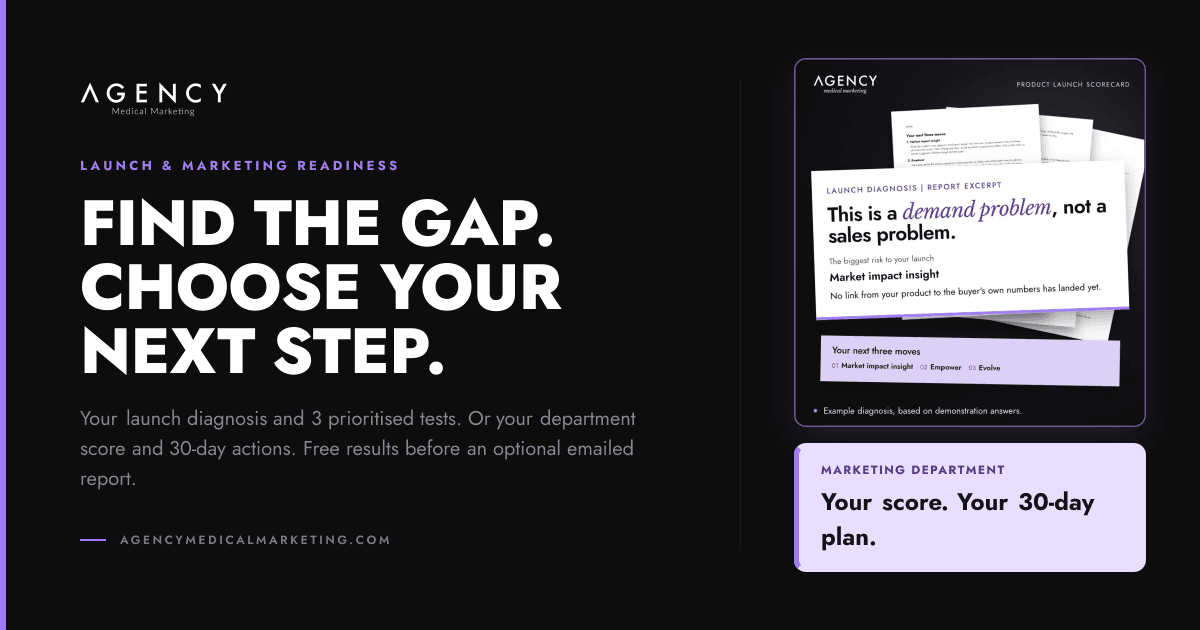
Diagnose a product launch and get three tests to run, or score your marketing department and get 30-day actions. The emailed report is optional.
Find your marketing gaps
Work through the decisions behind a compliant healthcare campaign. See where your approach moves forward or gets stuck.
Play Snake Oil & Ladders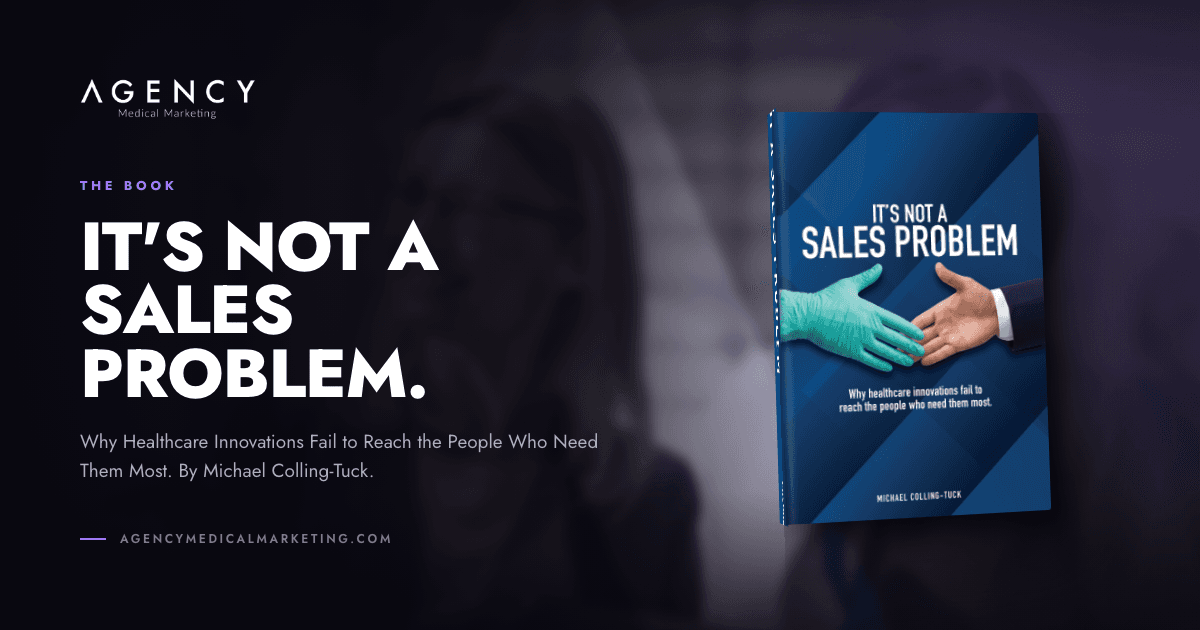
Explore why good healthcare products struggle to reach the people who need them, and how to build demand. Read three free chapters.
Read three free chapters