
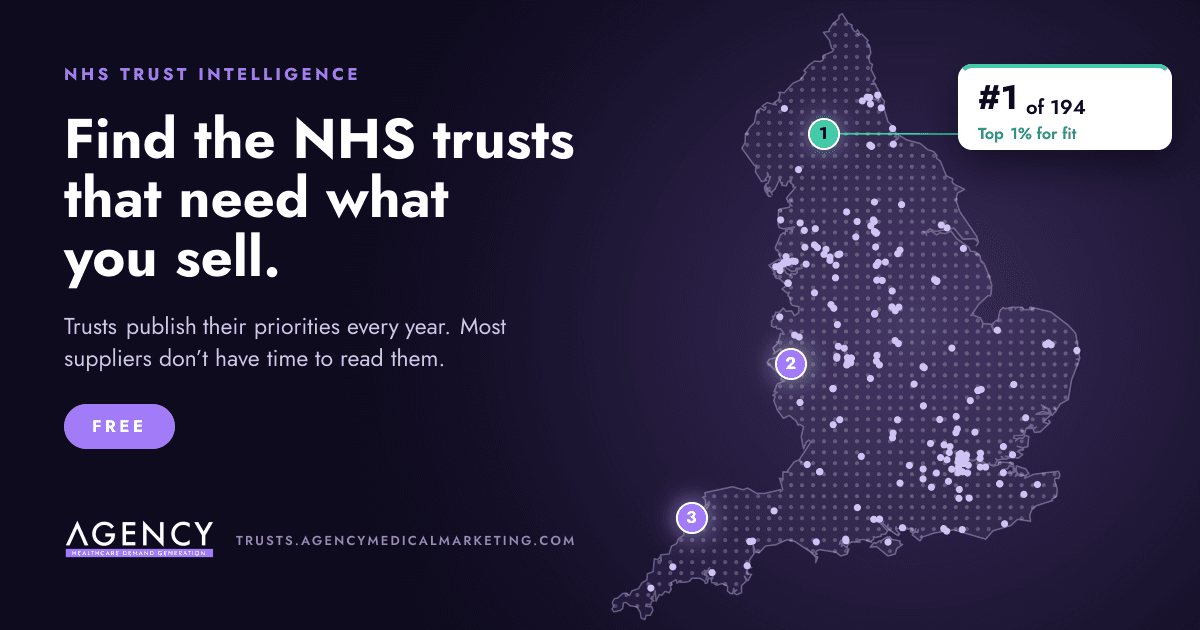
NHS account intelligence
NHS Trust Intelligence
See which NHS trusts fit your product, using their stated priorities and the evidence behind each match.
Explore NHS Trust IntelligenceConcept · Diagnostic
If the market does not know you, does not trust you, or does not see you as relevant, you can hire ten more reps and nothing will change. Diagnose before you prescribe.
The instinct
When the quarterly numbers come up short, the first reflex is almost always the same. More calls. More outreach. More activity. Maybe a new CRM. Maybe a sales training programme. Maybe a performance conversation with the underperformers.
Sometimes that is the right answer. Often it is not. Pushing sales when the actual problem is demand is how companies burn good reps and end up further behind than when they started.
The distinction
Sales problem
You have interest in the market. Qualified prospects know who you are, recognise the category, and accept that you are a credible option. They are just not converting.
Symptoms: plenty of interest early, weak close rates, long stagnant deals, reps losing on price or process.
Demand problem
Your pipeline is not reflective of the size of the addressable market. People do not know you exist, do not trust the category, or have not yet decided the problem you solve is worth solving.
Symptoms: low inbound, pipeline built one rep at a time, big chunks of the market unaware, HCPs default to incumbents.
Three-minute diagnostic
01If your three best reps took gardening leave tomorrow, would the pipeline still build?
If yes, demand is working. If no, you have a demand problem masquerading as a sales success.
02Can an HCP describe what you do without talking to one of your people first?
If not, you have a positioning gap. Sales will not close what the market cannot repeat.
03Are your lost deals going to competitors, or going nowhere?
Lost to competitors is usually a sales problem. Going nowhere usually means the market did not prioritise solving the problem you sell into. That is demand.
What fixes what
Sales problems respond to sales-side interventions. Better enablement, better objection handling, better stakeholder documents for procurement, tighter proposal frameworks, clearer pricing, removing friction from the buying process.
Demand problems respond to demand-side interventions. Thought leadership, patient-end campaigns that start the conversation the rep inherits, positioning work so the category is understood at all, content the HCP reads at 10pm before the meeting happens.
Spend sales money on a demand problem and you will burn your best people. Spend marketing money on a sales problem and you will have interest with nothing to close. Diagnosis first. Prescription second.
Where to go next
Book
It's Not a Sales Problem
The full version of this diagnostic, across 240 pages.
Methodology
Our Methodology
The 3 Es and SAFE. How we prescribe once the diagnosis is clear.
Service
Sales Enablement
For sales problems. Better tooling, clearer playbook.
Service
Product Launch
For demand problems at the pre-launch or early-launch stage.
Healthcare innovations deserve recognition. We help them get it.
Find the right NHS accounts, assess your readiness, explore campaign decisions or read the thinking behind our work.
See which NHS trusts fit your product, using their stated priorities and the evidence behind each match.
Explore NHS Trust Intelligence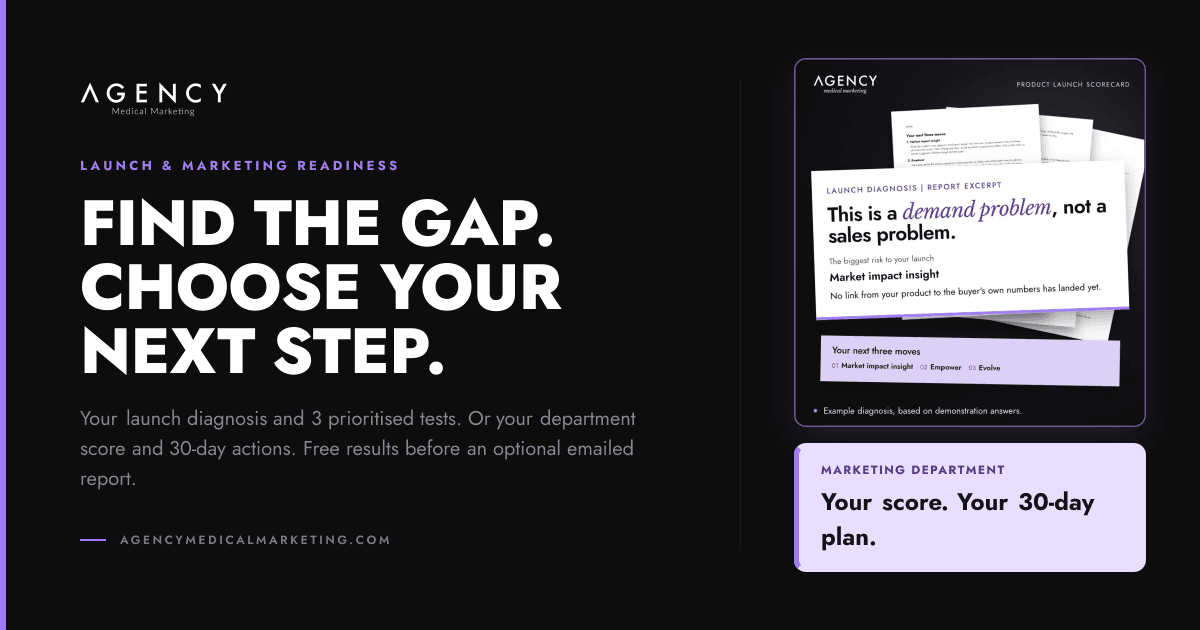
Diagnose a product launch and get three tests to run, or score your marketing department and get 30-day actions. The emailed report is optional.
Find your marketing gaps
Work through the decisions behind a compliant healthcare campaign. See where your approach moves forward or gets stuck.
Play Snake Oil & Ladders
Explore why good healthcare products struggle to reach the people who need them, and how to build demand. Read three free chapters.
Read three free chapters