
Medical Affairs Teams
You have the data. You know it's strong. But when you present to commercial teams, to partners, to non-clinical stakeholders, you can see them losing the thread. The evidence is right. The story structure isn't working.
Healthcare marketing training
Strong science doesn’t explain itself. Your team turns your clinical evidence, case studies and testimonials into stories each audience can follow, and learns where the rules draw the line before anything goes out.
Half day (GBP 850) or full day (GBP 1,500) · Up to 12 participants
From GBP 850 · 100% credited against any programme commissioned within 30 days
Your team presents a clinical story to an internal audience within 2 weeks, or we redesign and deliver it at no additional cost.
Shared product playbook resources support the audience, evidence and narrative work.
Who this is for
You have the data. You know it's strong. But when you present to commercial teams, to partners, to non-clinical stakeholders, you can see them losing the thread. The evidence is right. The story structure isn't working.
You're translating clinical papers into campaign copy, and something is getting lost. The headlines feel weak. The claims feel hedged. Your case studies read like summaries, and nobody is sure what you can do with a testimonial. You need a framework that tells the story without compromising the science.
Your reps are leading with data when they should be leading with story. They know the clinical evidence but can't connect it to what the customer cares about. The twelve-minute window closes before the value proposition lands.
This workshop is not for you if:
01
02
03
Open a sample to read it at full size. Shared workbook exercises and related guides are labelled below; the workshop applies the relevant work to your own situation.
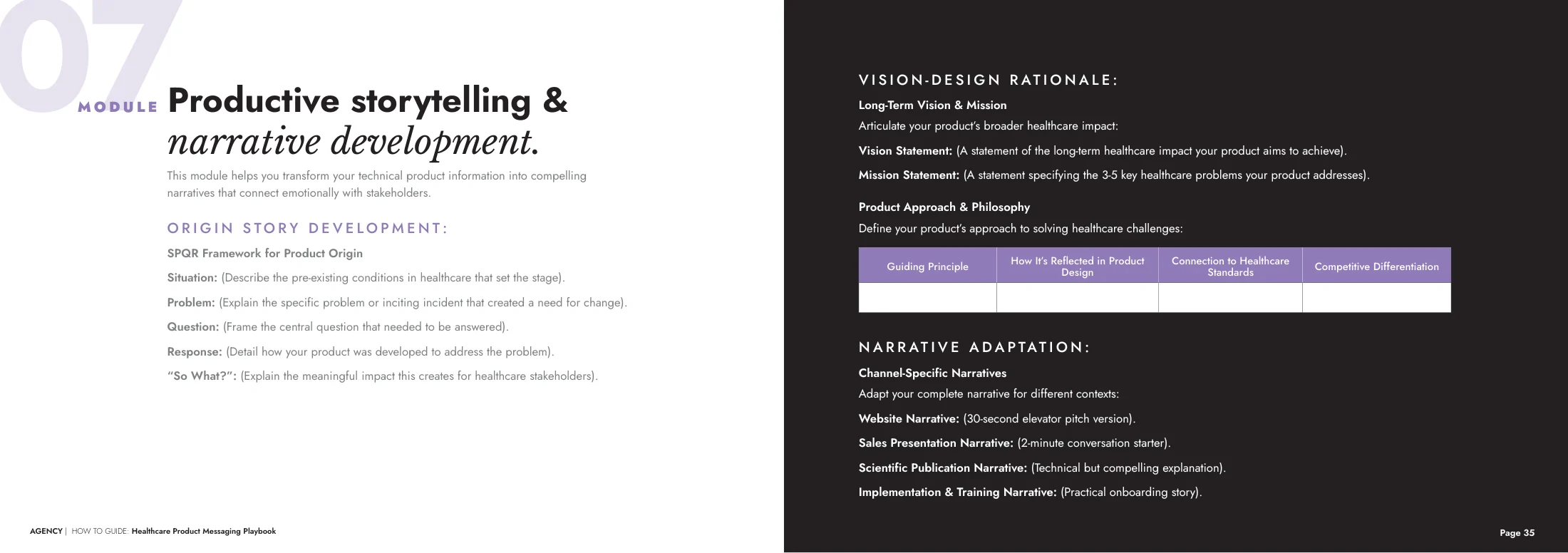
Blank storytelling exercise from the shared product messaging workbook.
Open the full-size sample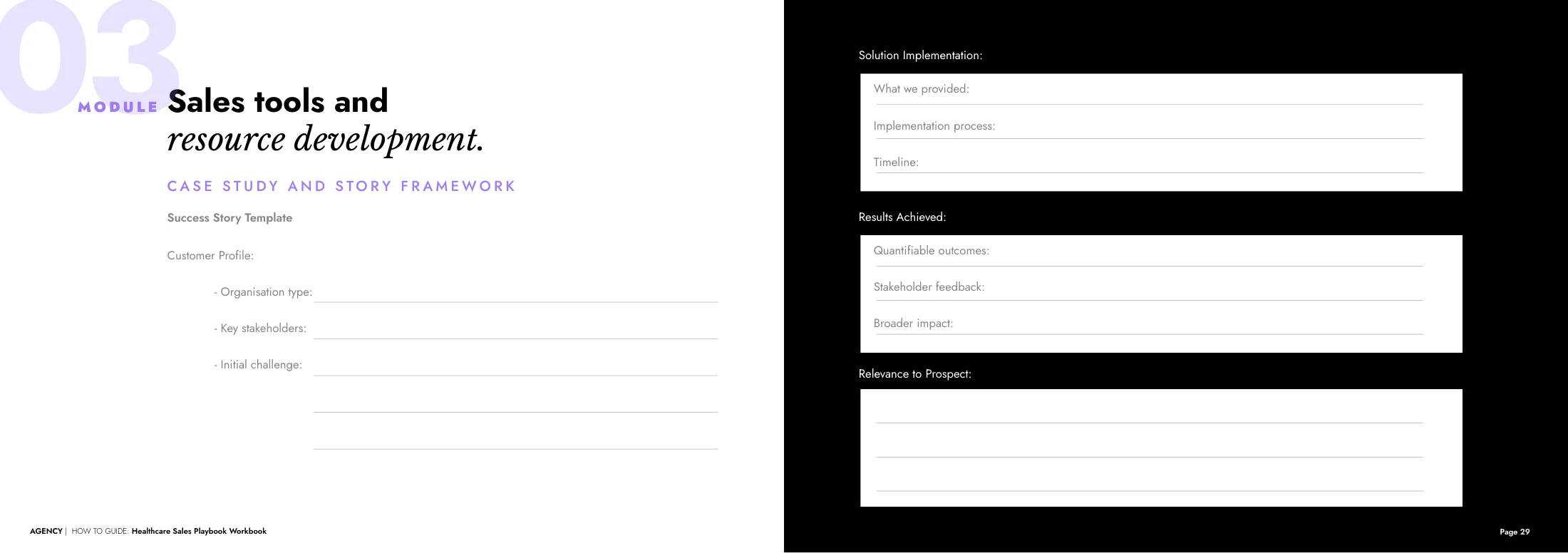
Blank story template from the shared sales playbook workbook.
Open the full-size sample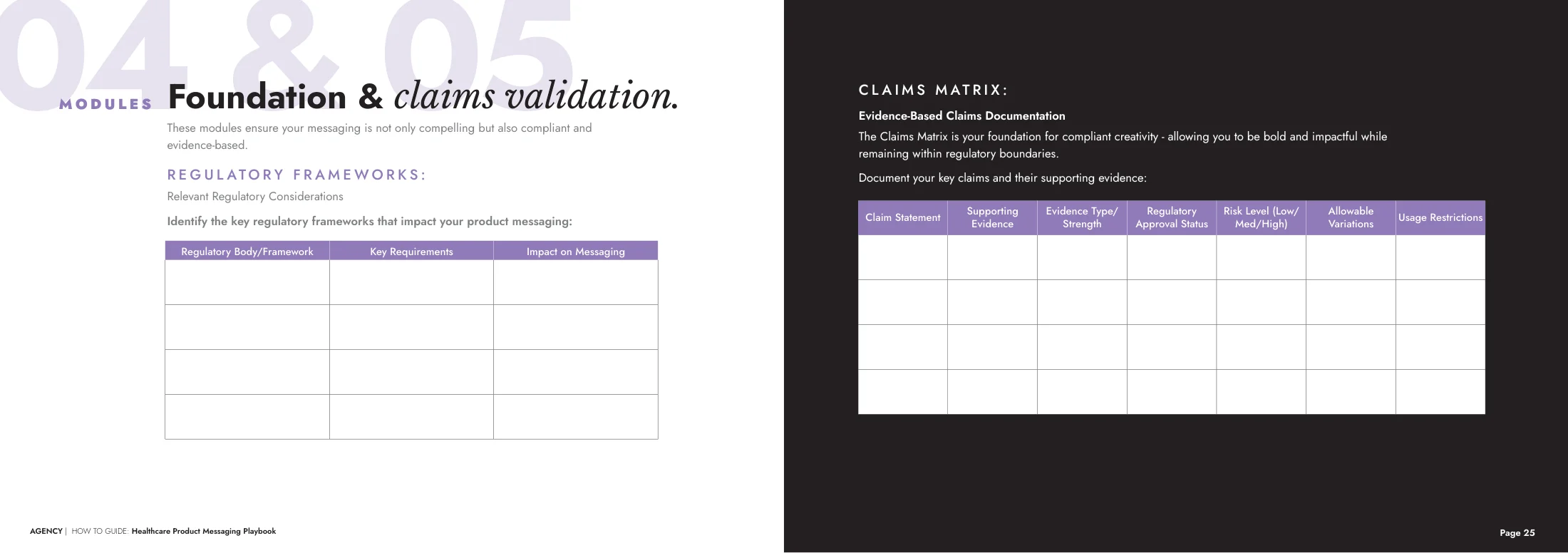
Blank review exercise from the shared product messaging workbook.
Open the full-size sampleAgree the product, audience and challenge to work on.
Apply the exercises with your team and review the work in the room.
Agree what to complete, who owns it and how you will review progress.
Facilitated by Michael Colling-Tuck: law degree, 47 product launches, author of It’s Not a Sales Problem.
Your team presents a clinical story to an internal audience within two weeks of the workshop, or we redesign and deliver it at no additional cost. Training that doesn't translate to action is theatre. We keep skin in the game.
100% of your training fee is credited against any programme commissioned within 30 days.
The evidence says what is true. The story says why it matters. Your team separates data from the narrative that explains it, and you need both. Then The Elastic Band shows where a claim should land: stretch too far and you lose trust, stay too close and it means nothing.
Every audience needs a different version of the same evidence. The clinician needs outcomes. The procurement lead needs economics. The patient needs clear information they can understand. We build audience profiles and evidence hierarchies for your specific products, so every version of the story is grounded in the same data but structured for the person in the room.
Story structure applied to clinical evidence: your customer as hero, their problem, the mechanism, the evidence, the outcome. How to rank the evidence so the strongest point leads. The techniques that make complex science land with non-clinical audiences without losing clinical credibility. Safety information and limitations stay with the claim, never in the appendix.
Often your strongest stories, and the easiest to get wrong. What you can use depends on the product and the audience. You leave with a checklist that sorts your own material, and your regulatory team keeps the final say.
Full day only. Apply the framework to your actual products. Each participant builds and presents a story for a real audience they face. Group feedback. The version that works, ready for your usual review and approval.
Narrative Architecture Framework. The structure for turning any piece of clinical evidence into a story for any audience. Reusable across all your products and all your stakeholder types.
Audience Translation Templates. Evidence-to-narrative templates for each stakeholder type: clinician, procurement, patient, board. The scaffold for every future story.
Evidence Hierarchy Guide. How to rank and sequence clinical evidence. What leads, what supports, what belongs in the appendix. The tool that stops every conversation opening with a p-value.
Testimonial and Case Study Checklist. What to check before you use a story: the product type, the audience, permission, the evidence behind any claim. A starting point for your regulatory team, not a replacement for it.
Story Bank (Your Products). Full day: a library of stories built during the workshop for your specific products and audiences. Ready for your usual review and approval.
Presentation Review Checklist. The ten questions to ask before any clinical presentation. Does it open with the problem? Does it land the mechanism? Does it close with action? The quality gate for every piece of clinical communication.
Medical affairs, marketing, and commercial teams, ideally together. The story works best when clinical and commercial people build it in the same room. 12 participants maximum.
Participants bring their current clinical presentations or key papers, plus any case studies or testimonials you would like to use. Takes no additional preparation: we use what you already have.
Half day covers the framework, the methodology and the rules on case studies and testimonials. Full day adds the applied session: building actual stories for your products. Full day is where the work gets done, not just understood.
It depends on the product and the audience. Apart from narrow government-approved exceptions, such as vaccination campaigns, prescription-only medicines must not be advertised to the public, directly or indirectly, so a patient testimonial cannot be used to promote one. Disease awareness work can inform people about a condition, but its main purpose must be education, not promoting a medicine. Take particular care where only one or a few treatments exist. In advertising over-the-counter medicines to the public, recommendations from health professionals, scientists and celebrities are out, a case history must not lead anyone to diagnose themselves wrongly, and claims of recovery must not mislead or alarm. For medicines promoted to health professionals, the ABPI Code expects information and claims to be accurate, balanced and substantiated, and quotations faithful and sourced. For devices advertised to the public, the CAP Code expects a testimonial to be genuine, backed by documents and contact details, about the product, used with permission and not misleading. It also restricts public advertising of prescription-only medical treatments, so whether a clinician-only device can be advertised to the public is for your regulatory team. In advertising to health professionals, ABHI members must also hold signed, dated evidence and consent, use only typical experiences, make any sponsorship or collaboration clear, and give no payment or benefit for a testimonial beyond receipted expenses. On its own a testimonial cannot prove an objective claim. That is our reading of the UK rules, not legal advice. Other markets differ, and your regulatory team has the final say.
Michael Colling-Tuck. Law degree. First healthcare role in infusion therapy, then surgical implants. 20 years in healthcare and 47 product launches. Author of It's Not a Sales Problem.
All frameworks and templates delivered digitally within 2 working days. The full-day story bank formatted and ready for your review. Follow-up at 2 weeks. Guarantee applies.
Book this workshop
Half day (GBP 850) or full day (GBP 1,500) · Up to 12 participants
From GBP 850 · 100% credited against any programme commissioned within 30 days
Tell us how many people and when suits. No call needed first: Michael confirms dates, format and the booking details within two working days.
Register interest in this topic. There is no confirmed date or commitment.
Find the right NHS accounts, assess your readiness, explore campaign decisions or read the thinking behind our work.
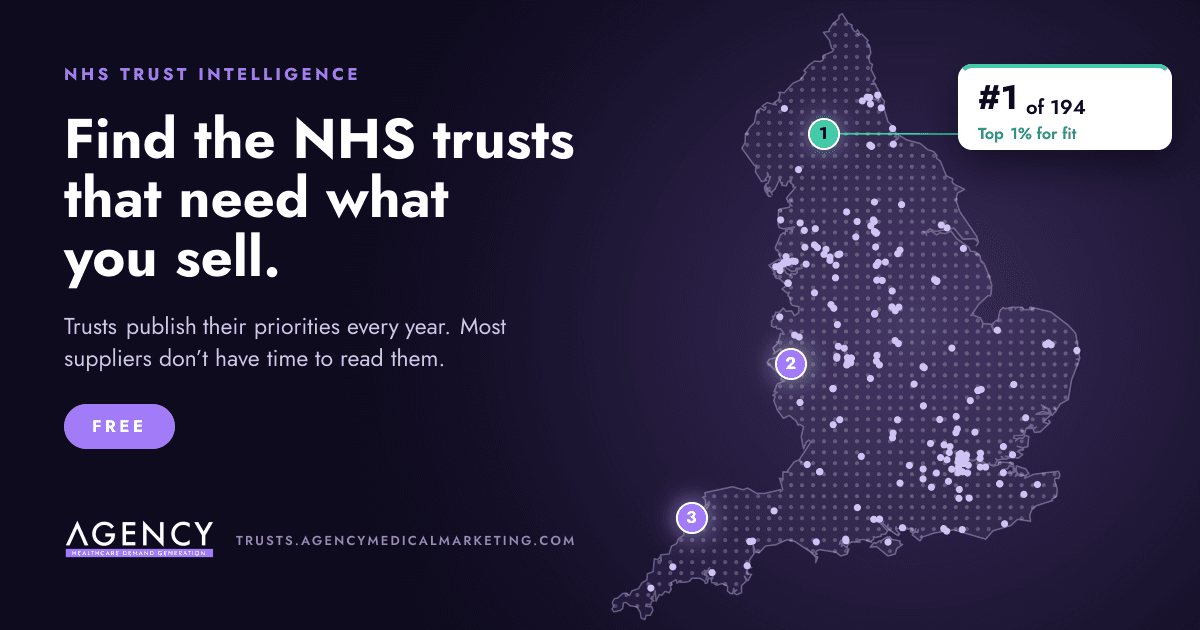
See which NHS trusts fit your product, using their stated priorities and the evidence behind each match.
Explore NHS Trust Intelligence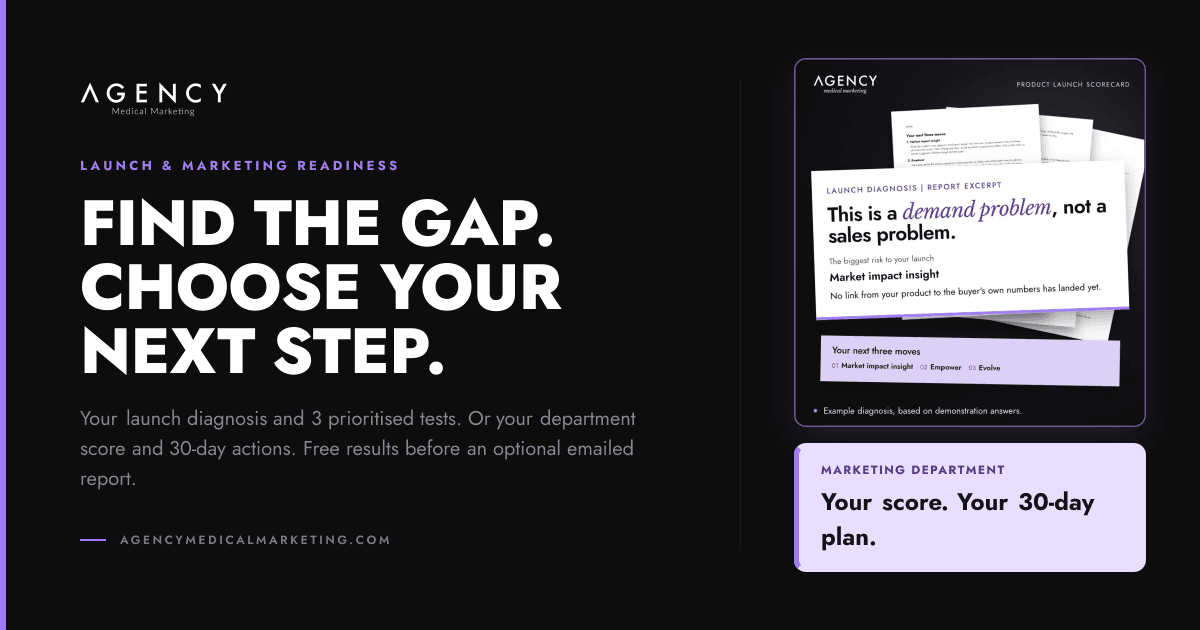
Diagnose a product launch and get three tests to run, or score your marketing department and get 30-day actions. The emailed report is optional.
Find your marketing gaps
Work through the decisions behind a compliant healthcare campaign. See where your approach moves forward or gets stuck.
Play Snake Oil & Ladders
Explore why good healthcare products struggle to reach the people who need them, and how to build demand. Read three free chapters.
Read three free chapters