
01
Learning
Can people use what they learnt?
Illustrative success measure
18 of 24 participants apply the planning method
Evidence
Before-and-after task, then a later application check
Owner / review
Learning lead
4 weeks
A practical guide to event value
The £40K StandStart with the outcome your event needs to support. Use a scorecard to agree the evidence, owners, costs and review dates before you sign the contract.
Free printable worksheet. No email or registration.
AGENCY | Your event scorecard
What would make this event worth doing?
Success measure / Evidence / Owner / Review date
Before the budget becomes the brief
An educational meeting, a relationship-building event and a sales-led congress can all be useful. Each needs its own test of success.
Agree the intended change first. Then decide who needs to take part, what they will do and how the work continues afterwards. The scorecard helps you make that decision visible to the team.
Explore the five-stage event journeyA worked event scorecard
This fictional example shows how four different outcomes can be reviewed. It is a starting point for discussion, not a requirement that every event achieve all four.
Choose the outcomes that fit the event. Agree targets, evidence, owners and review dates together.
Can people use what they learnt?
18 of 24 participants apply the planning method
Before-and-after task, then a later application check
Learning lead
4 weeks
Did the right conversations progress?
12 agreed next steps from 20 priority-account conversations
Conversation record, permission and a named next action
Account lead
30 days
Did a qualified opportunity move?
6 open qualified opportunities reviewed in the CRM
CRM history, source and influence recorded separately
Sales lead
90 days
What value was actually realised?
Break even on attributable realised contribution
Finance records and an agreed attribution basis
Finance lead
90 days, then revisit
Attendance and scans describe activity. They do not, by themselves, establish learning, an agreed next step, qualified pipeline or financial return.
A dashboard that keeps the distinctions
Learning and relationships have value in their own right. Pipeline describes potential future business. Realised financial ROI answers a different question, using contribution you can reasonably attribute to the event.
Illustrative event review
All figures below are invented to show the method. They are not AGENCY or client results, targets or benchmarks.
Demonstrated application at the four-week check
Agreed next steps from 20 priority-account conversations
Six open opportunities where the event contributed. Not revenue.
Illustrative realised financial ROI at the review date
Realised contribution versus full cost
Open pipeline of GBP 120,000 stays outside this calculation.
Realised financial ROI
-25%(GBP 30,000 − GBP 40,000) ÷ GBP 40,000 × 100
Below break-even at the 90-day reviewIn this fictional example, realised sales of GBP 100,000 generate GBP 60,000 contribution after product and delivery costs, before event costs. An illustrative 50% event attribution assigns GBP 30,000 to the event.
This attribution is an assumption, not proof of causality. Agree a defensible basis with finance, account for other activity and review later outcomes without counting the same value twice.
The full investment
Set the cost basis with finance. Include the work before and after the event, staff time and any relevant unrecoverable taxes or overhead allocation. Count each cost once.
Financial ROI = (attributable realised contribution − full event cost) ÷ full event cost × 100.
Use contribution after product and service delivery costs, before event costs. Agree the review window and attribution basis. Record other influences, avoid double-counting and revisit longer sales cycles. Open pipeline is neither realised revenue nor profit and belongs outside the ROI calculation.
Two questions from Charlie Litchfield
What people do in the room and what happens afterwards belong in the same plan. Charlie’s books challenge both sides of that decision.

Meaningful measurement
Move beyond traffic and scans. Charlie examines measurement plans, outcome scorecards and the reality behind an event’s financial return.
Explore the book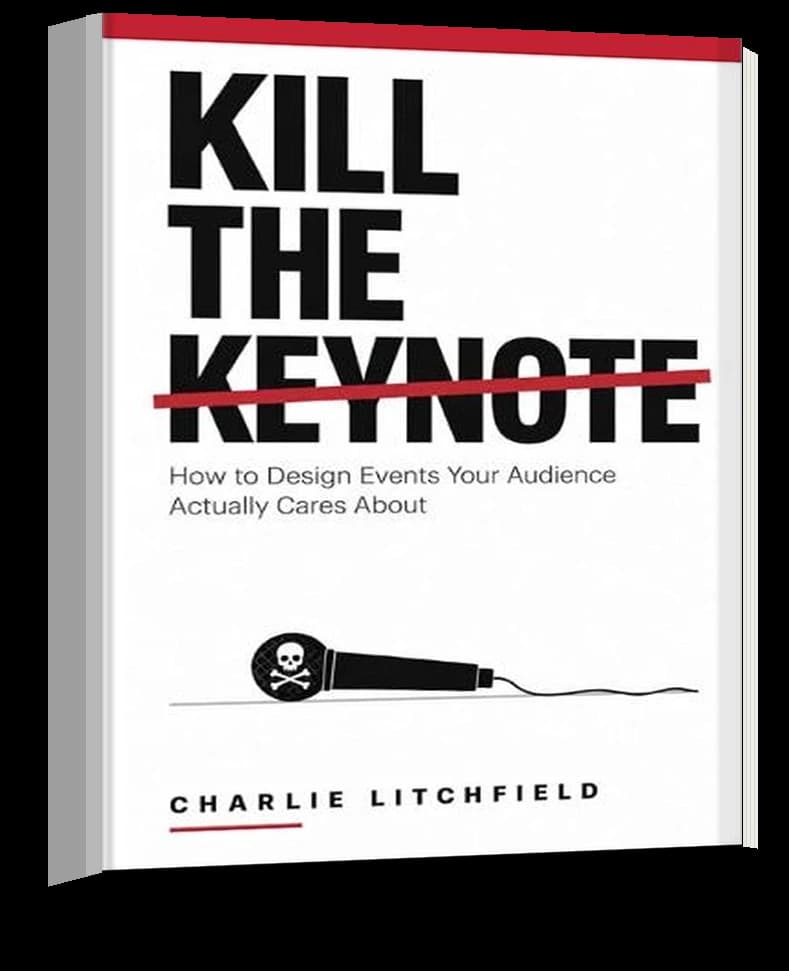
Participative experience
Design what people will do, rather than only what they will watch. Charlie challenges passive presentation formats and makes the case for a room with something to contribute.
Explore Charlie’s book Apply the Whole Room approachUse it in your next decision
Choose the outcome that matters. Record the current position and the change you need to see.
Set an appropriate success measure, evidence source, owner and review date. Agree the full budget and attribution limits.
Review what happened. Decide what to continue, change or stop, and give the next actions an owner.
The next useful step
Use the worksheet with your team, or bring us the event, audience and investment decision you need to make. We agree the scope and fee before starting any work.
Find the right NHS accounts, assess your readiness, explore campaign decisions or read the thinking behind our work.

See which NHS trusts fit your product, using their stated priorities and the evidence behind each match.
Explore NHS Trust Intelligence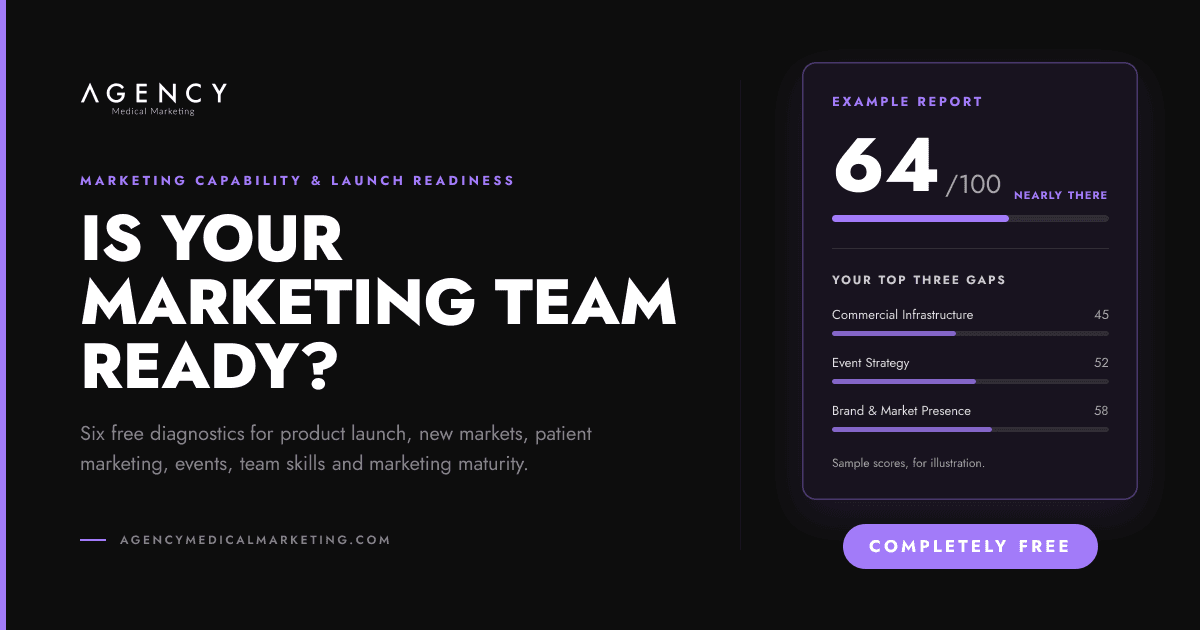
Check product launch and marketing department readiness. Get useful results and 30-day actions before an optional emailed report.
Find your marketing gaps
Work through the decisions behind a compliant healthcare campaign. See where your approach moves forward or gets stuck.
Play Snake Oil & Ladders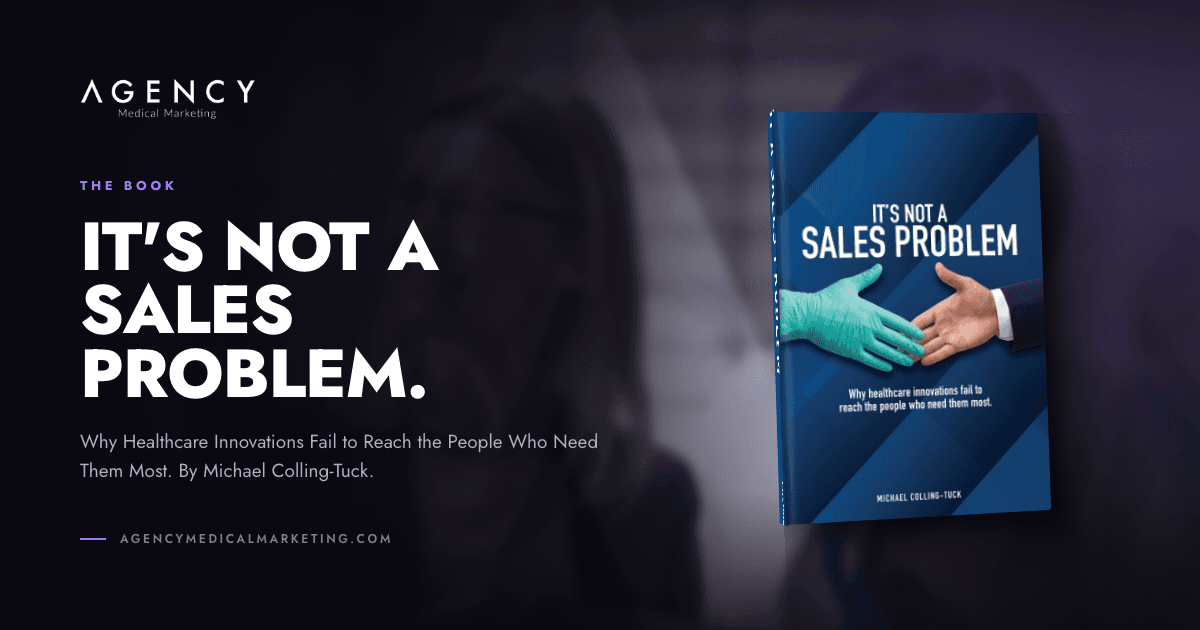
Explore why good healthcare products struggle to reach the people who need them, and how to build demand. Read three free chapters.
Read three free chapters